The current industrial regulations require parts to have clearly legible identifications, therefore, increasing the popularity of the laser marking process. Previous industrial trends required manufacturers to mark surfaces with traditional engraving or screen printing processes. These processes were non-permanent, costly, and usually caused part defects.
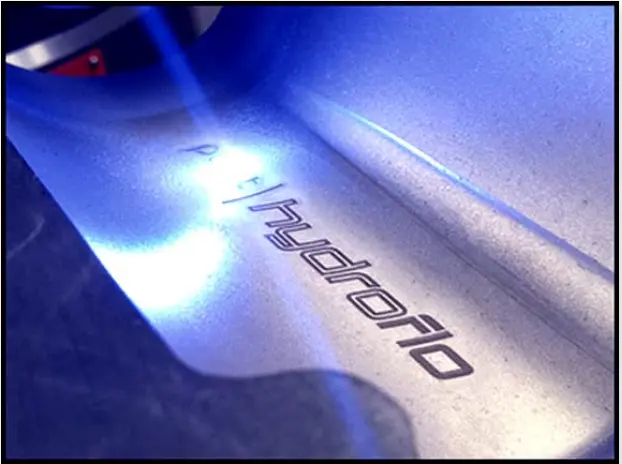
However, the introduction of laser marking now allows engineers and manufacturers to create numbers, images, or characters without compromising part quality. Instead of using physical tools for etching surfaces, this technique employs focused laser beams to create easy-to-read, damage-free marks.
Laser marking is a very versatile process, encompassing different techniques such as engraving, etching, foaming, carbon migration, etc. The right marking method will depend on your material and quality requirements. Read on as we discuss the details of this innovative technique.
What is Laser Marking and How Does it Work?
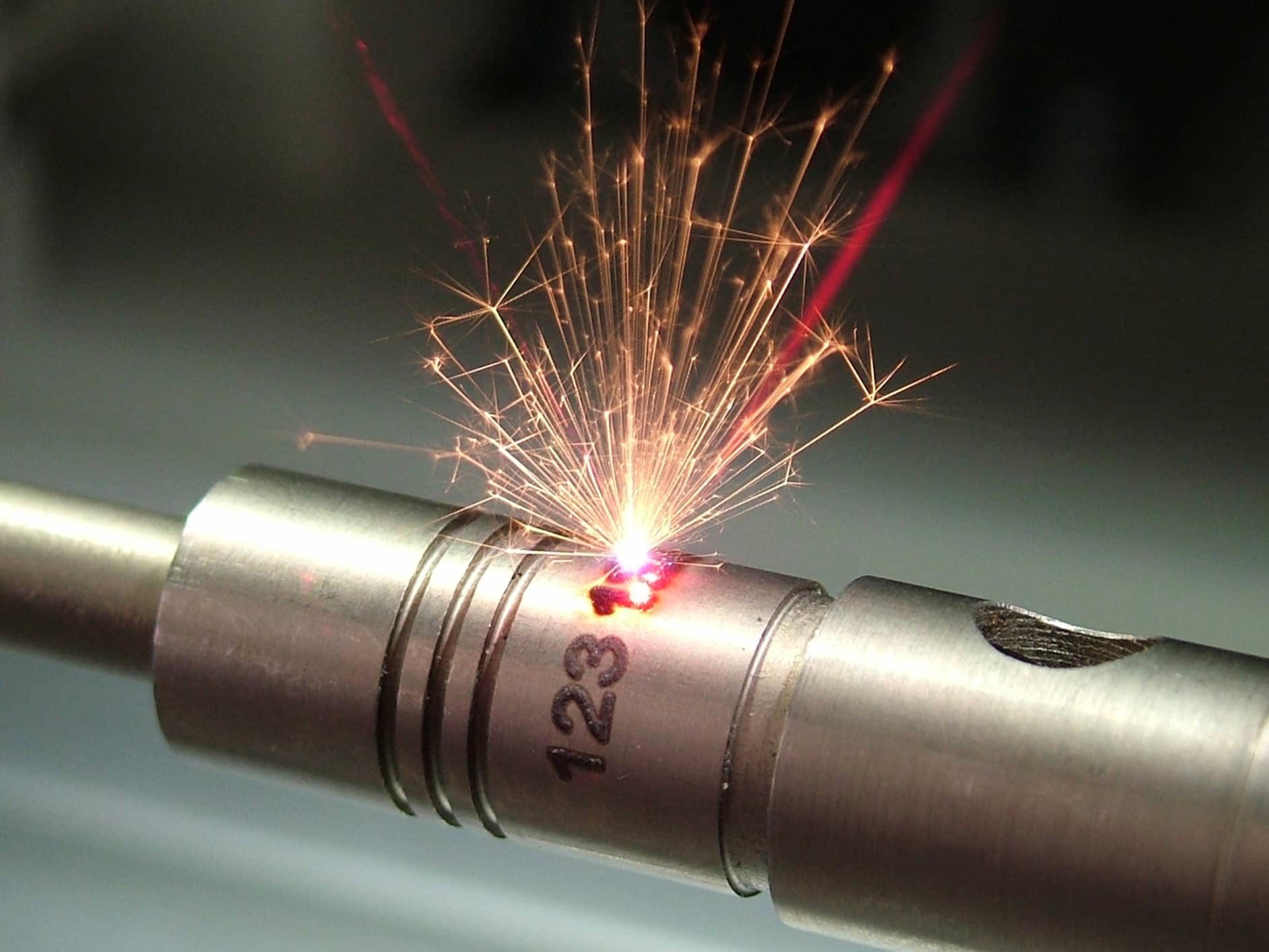
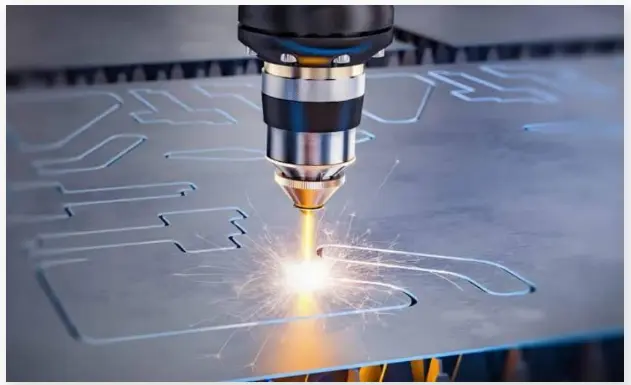
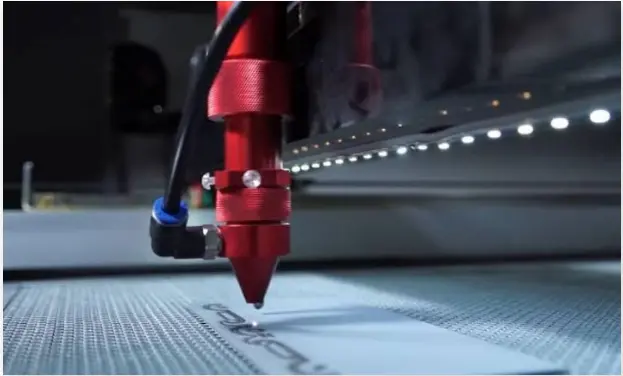
Laser marking is a process that uses a concentrated beam of light to create permanent marks on the surfaces of target components. The process is typically carried out with a laser machine using an oscillator, a scanning mirror, and a focusing lens.
The machine also allows automation and processing at high speeds, consequently leaving permanent traceable marks on a wide range of materials. Laser marking allows parts and products to be marked with:
Texts, including part numbers and serial numbers
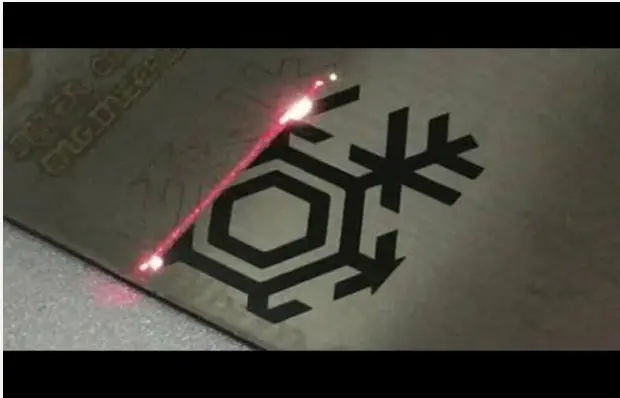
Machine-readable data such as Unique ID codes, 2D Data Matrix codes, barcodes, etc.
Graphics
How Laser Marking Works
The laser marking technology creates lasting marks on component surfaces by generating focused beams of light containing high energy levels. The built-up energy is released in the coherent light beam directed at the material surface using mirrors.
As a result of the light beam interacting with the component’s surface, there is a transfer of heat energy from the beam to the surface. Therefore, the appearance and properties of the material will change. Depending on the energy level, the laser can engrave, etch, anneal, or discolor surfaces with great precision.
The concentrated beam targets only specific areas on the material, ensuring precise, high-contrast, and high-quality marks. These marks are permanent, and you can easily read or scan them on any surface. As a result, this marking process is ideal for operations where permanency and accuracy are critical.
The Evolution and History of Laser Marking
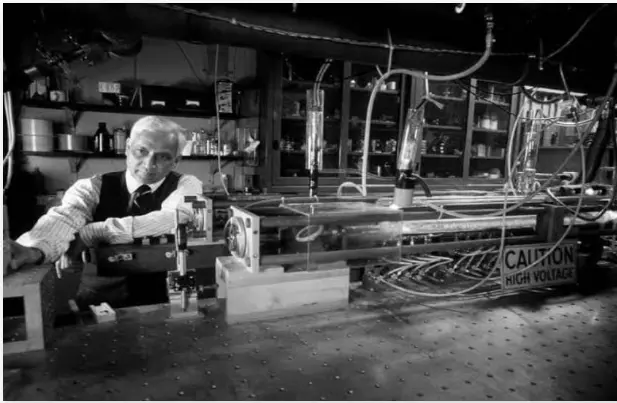
Laser technology began with Albert Einstein back in the early 1900s, and further evolution was seen in 1964 with the creation of the first CO2 laser. Peter Houldcroft of The Welding Institute (TWI), Cambridge, pioneered the first commercial applications of Laser Material Processing. The earliest “Laser Machining” applications were driven by manufacturers of automobiles and aircraft components.
In a bid to improve computer engravings, Electrox developed the first commercial axial flow CO2 laser machine as a major source of laser marking systems. Technological advancements in the 1980s and 1990s led to an integration of computer systems into laser marking. The more efficient and modern fiber lasers came to light in 2001, and has improved ever since.
Today, laser markers are more improved, accurate, faster, and more environmentally friendly. There are now more versatile and cost-effective laser marking technologies, creating high-quality durable markings directly on part’s surfaces. These technologies are faster, more compact, and can create marks on a wider range of substrates.
As a result of the more powerful and flexible systems, users can create consistent markings on a large batch of products. Therefore, they achieve business goals within a short time and at lower prices.
Types of Laser Marking Techniques
There are several laser marking technologies for different applications out there. Each technique has its benefits and downsides, and your choice will depend on budget, quality requirements, and applications. Let’s examine some of these techniques.
Laser Engraving
This process involves the removal of some materials from components’ surfaces using laser beams. During the process, the material will absorb heat from the laser, melt, and evaporate, creating marks in the form of depressions. The material will also react with air, causing a color change to make the mark more distinctive.
There are no consumables involved in laser engraving. Thus, it attracts low operational costs compared to other engraving methods that use special inks or drill bits. Laser is suited for a wide range of materials, including metals, plastics, and ceramics. Therefore, engineers employ it for many diverse applications.
Laser Etching
This highly versatile process creates marks on workpieces by melting their surfaces. The laser beam produces a raised mark by delivering high amounts of energy to a small, localized area. Consequently, the surface will melt and expand, changing the color to black, gray, or white.
Etching is commonly used for producing permanent markings like serial numbers, data matrix codes, logos, and barcodes. It is also a versatile process ideal for a wide range of metals, including aluminum, lead, steel, magnesium, stainless steel, etc.
Related: Understanding Differences Between Laser Engraving and Laser Etching.
Laser Annealing
In laser annealing, the laser beam will heat the material surface locally to create the mark. The beam only penetrates between 20 to 30 µm into the material surface, thereby resulting in a very minimal change on the surface. The localized heating causes color changes in the material. The marking could be black, red, yellow, or green, depending on the temperature of the heated layer.
The results of laser annealing are permanent abrasion-proof markings. Laser annealing works best on ferrous metals and titanium. Therefore, various industries can use it, ranging from healthcare to automotive, food and beverages, and aerospace industries.
Carbon Migration
In this method, heat energy from the laser will break plastic bonds and release oxygen and hydrogen. This reaction causes the target area to darken, giving a grey to blue-gray mark. Carbonizing or carbon migration is always the ideal option for marking synthetic polymers and organic materials.
It works well with paper, wood, leather, packaging materials, etc. However, carbon migration is not very suitable for dark-colored objects. The grey mark formed will have lower contrast to the rest of the workpiece, making it difficult to read the markings.
Foaming
While carbon migration may not be of much help when you need to produce light-colored markings, foaming is more suitable for these kinds of applications. The process involves heating the material surface with the laser, causing it to melt and emit gas bubbles. When the gas bubbles oxidize, they form a sort of frothing, causing them to reflect light.
This method is one of the best marking options for dark-colored components. This is because the mark is raised above the component’s surface with higher contrast with the other parts of the surface. It is also ideal for marking polymers.
Discoloration
In this technique, the laser removes layers of the workpiece, revealing the underneath layer. The removable material absorbs heat from the laser and vaporizes to produce a contrast. Therefore, it is crucial to ensure that the color of the top coat is different from that of the base material.
This method is more effective for coated materials like anodized aluminum because they will display excellent and legible markings. Other materials that work well with discoloration are laminates, films, and foils. It is an excellent technique for marking labels, fittings, and packaging objects.
 Tony Chow
Published Date: 2026/1/13
Tony Chow
Published Date: 2026/1/13